
Today, thanks to television coverage and media hype, it has a huge multiplier effect, says an auto-parts maker.

Several industry leaders on Monday supported United Progressive Alliance chairperson Sonia Gandhi's proposal of giving annuity to farmers in addition to compensation for land acquired for industrial purposes.

For a petrol car with a Rs 500,000-600,000 price tag, an EV variant would not cost less than Rs 12 lakh, making it virtually unaffordable.

Ban on large diesel vehicles a transient phase, says Jaitley

After the easing of lockdown in mid-May, auto companies were able to resume production in a phased manner, but the ramp-up was slow due to a broken supply chain, and lockdown-induced restrictions.
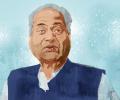
Rahul Bajaj was transparent, outspoken, and not ready to bend the rules, says R C Bhargava.
Terming Satyam's shocking disclosure of about the Rs 8,000-crore (Rs 80 billion) financial fraud as a 'one off case', corporate leaders today expressed confidence and said it will not damage the image of India Inc.
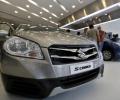
Around 23 per cent of all units sold by the company in the domestic market currently are diesel cars.

According to government data, the Centre procured only 35,179 ventilators out of the 50,000 originally ordered.

Today, Suzuki depends on Maruti for its place in the world

The ongoing elections and overall subdued market sentiment continue to affect the sales momentum

The company cited low demand in the second half of the year due to high interest rates, increased insurance cost and fuel prices for its downward revision
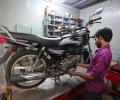
The company will utilise this time to carry out maintenance work at its manufacturing plants.

Unprecedented bribery charges, farewells, separation, failed union, monumental mergers and record-breaking IPOs, along with a healthy dose of online happenings in the form of spat and lessons in customer care, corporate India saw it all in 2024.

The MSI board has recommended a dividend of Rs 75 per share of face value Rs 5 for 2016-17 entailing a total outgo of Rs 2,726 crore inclusive of taxes

The GST Council last year imposed a cess of 15 per cent on hybrid vehicles, in addition to the 28 per cent GST, leading to a total tax burden of 43 per cent against a previous tax rate of 28 per cent.

The total number of passenger vehicles (cars and utility vehicles) sold annually in the 1970s was 32,000 units - less than even one week's sales today.

Maruti Suzuki is keen that the Gujrat government revises payment condition in the agreement it signed with the former for setting up a plant in Hansalpur.
While hybrids, CNG and biofuels found favour in 2018 among many carmakers including Maruti Suzuki, Mercedes-Benz, Toyota and Honda, others such as M&M and Tata Motors have shown full faith in electric vehicles.

The industry players couldn't hide their disappointment.

Market leaders saw good traction for new cars, including the electric ones.
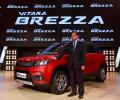
Maruti Suzuki and Hyundai would make the largest gain.

The list of the prestigious Padma Awards 2016 awardees is out and superstar Rajnikanth is set to be honoured with the nation's second highest civilian award, the Padma Vibhushan.
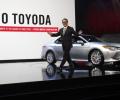
Automobile companies are worried about challenges from electric mobility, automation and connected vehicles.

Maruti Suzuki India (MSI) plans to drive in CNG trims across its product range as it remains bullish over long-term prospects of the segment amid increase in fuel prices and drop in diesel car sales, according to a senior company official. The company, which sold around 1.62 lakh CNG cars last fiscal year, is also counting on the rapid expansion of CNG dispensing outlets across the country to bring in more CNG products. Bullish on the expansion of the sales network, the automaker expects its CNG car sales to almost double this fiscal year over 2020-21.

A weaker rupee against the US dollar and the Japanese yen along with margin sustenance pressures have forced companies to raise prices.

Amid better semiconductor chip supplies, the Indian automotive industry posted an 8 percent growth in production of vehicles across categories for the month of May, with three-wheelers (20 per cent) and passenger vehicles (16 per cent) leading the pack. Exports, however, dipped 21 per cent at an industry level. The industry also recorded its highest-ever May wholesales of domestic passenger vehicles (334,802 units), riding on high demand for sport utility vehicles (SUVs) and better supplies of semiconductor chips.
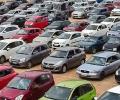
In a rare face off, captains of the auto industry have hit out at the government for not walking the talk. At an industry event in the capital on Wednesday, R C Bhargava, chairman of India's largest carmaker Maruti Suzuki, and Venu Srinivasan, chairman of TVS Motor, questioned the government's intent to support the auto sector. Revenue secretary Tarun Bajaj sat in the audience listening, before his turn came to counter them.

Car makers see a dip in demand from their biggest buyers, Ola and Uber. Demand from aggregators weakened for a number of reasons after a strong growth last year.

E-vehicles may face pollution hurdle with hazardous batteries. One lithium-ion battery has a potential to poison the whole water aquifer of Delhi.
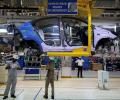
Availability of jobs at India's auto companies has shrunk significantly over the last two years, as the industry goes through one of its worst slowdowns. More than 60 per cent of the total workforce fell by 24 per cent in 2019-20, against 2017-18.

One can see the scale of recalls going up as the market expands.

An alternative to a small car, it is expected to be priced ex-showroom between Rs 260,000 and Rs 300,000, and will offer better mileage (more than 30 km a litre) and less pollution than a car, and will be a convenient alternative to a two-wheeler but at the same operating costs.

During the meeting with Finance Minister Nirmala Sitharaman, the auto industry broadly presented factors such as issues regarding availability and affordability of financing, increasing cost of acquisition of vehicles and change in axle load capacity for commercial vehicles that have hurt demand.

The electric vehicle evolution in India's passenger vehicle market has remained frozen in time and may see limited adoption over the next decade, experts say.

In June, the new government led by Narendra Modi extended the excise duty concession by six months to December 31, which is not being further extended.

Car makers are trying hard to boost sales in India.

Indian auto industry's dependence on China is high and it will continue to be so in the BS-VI era and as the country moves towards electric mobility. Domestic players lack both technological competence and the sheer pricing advantage that support Chinese imports.

Nodal body, which will take charge on October 1, to maintain data, will suggest recalls & fines.
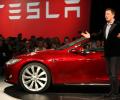
If Tesla comes in, India's position as a manufacturing hub will rise many notches, as it will become only the second country, after China, to have both Apple as well as Tesla.
